
American Tower: Bringing DAS Monitoring and Operations Together
Read article

Network Management Blog & News
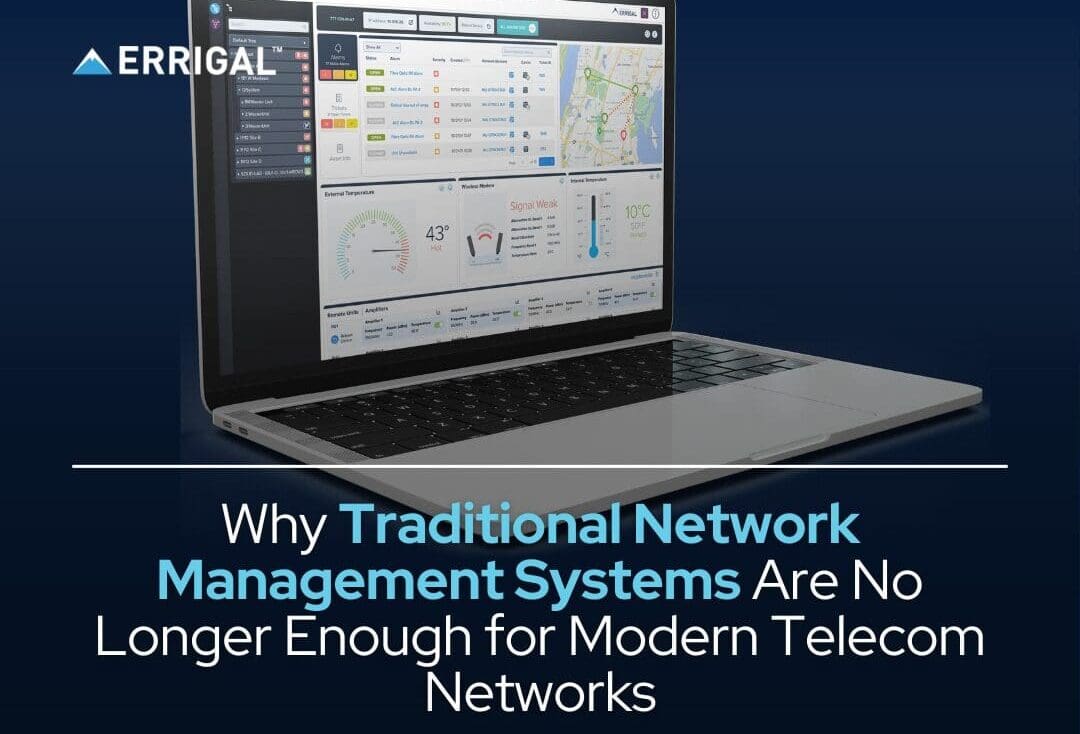
Modern telecom networks have evolved dramatically over the past decade. What were once relatively straightforward macro cellular networks have transformed into highly distributed, multi-vendor environments comprising Distributed Antenna Systems (DAS), Small Cells, Private LTE, Private 5G, WiFi, microwave backhaul, fibre infrastructure and thousands of connected devices.
Yet many Network Management Systems (NMS) haven’t evolved at the same pace.
Legacy platforms were designed to monitor individual network elements. Today’s networks require something fundamentally different: a unified operational platform capable of managing complex, multi-vendor infrastructure while providing meaningful operational intelligence.
Today’s operators rarely manage equipment from a single manufacturer.
A typical enterprise or neutral host deployment may include:
Each system often has its own management interface, alarms, reporting tools and operational workflows.
The result?
Operations teams spend more time switching between systems than actually resolving network issues.
Traditional NMS platforms focus on answering one question:
“Is the device operational?”
Modern network operations require answers to much more important questions:
Without this context, operations become reactive rather than proactive.
Many telecom operators inherit equipment through acquisitions, vendor changes or phased network upgrades.
Instead of replacing existing infrastructure, they often need to integrate it.
A modern NMS should provide:
This eliminates operational silos and allows engineers to manage the entire network from a single platform.
Many Network Operations Centres still rely on manual intervention for routine tasks such as:
Automation reduces response times while ensuring consistent operational processes.
Intelligent workflow engines can automatically correlate related alarms, create incidents, notify the correct teams and track the entire resolution process without manual input.
A healthy device doesn’t always mean users are receiving a healthy service.
This is particularly true within Distributed Antenna Systems (DAS), where equipment may report no faults despite users experiencing poor signal quality or failed connections.
Modern monitoring platforms should combine traditional device monitoring with user experience monitoring, providing operators with visibility into both infrastructure health and actual network performance.
Troubleshooting becomes significantly easier when engineers can compare current performance against historical trends.
Long-term analytics help operators:
Rather than simply reacting to alarms, teams gain the insight needed to improve long-term network reliability.
Modern telecom environments rarely operate in isolation.
An effective NMS should integrate seamlessly with:
Open APIs ensure network data becomes part of wider business processes rather than remaining trapped inside a monitoring platform.
Field engineers no longer return to an office before updating tickets or checking alarms.
They require secure mobile access to:
Mobile-first network operations significantly reduce response times and improve collaboration between field teams and Network Operations Centres.
When evaluating a Network Management System, organisations should prioritise platforms that provide:
These capabilities are no longer optional—they are becoming essential for managing modern telecom infrastructure efficiently.
Telecom networks continue to grow in scale and complexity, placing increasing demands on operations teams. Traditional Network Management Systems, designed for simpler environments, often struggle to provide the visibility, automation and operational intelligence required today.
A modern NMS should do more than monitor devices. It should unify multi-vendor networks, automate operational workflows, deliver actionable insights and provide a clear view of both infrastructure health and end-user experience.
For organisations managing DAS, small cells, microwave, fibre or enterprise wireless networks, investing in the right platform is no longer simply an operational improvement—it is a strategic decision that directly impacts service quality, operational efficiency and customer satisfaction.
Related Articles:
Keep exploring

Talk to our team about your network environment.
A conversation about your network
Tell us a little about your priorities.
Your enquiry will go directly to the Errigal team.